
Your AI agents,
on rails.
Describe the work, get back a reviewed pull request. A deterministic engine runs the agents, loops until the work passes its quality gates, and stops only to ask you what matters.
Eight things a chat
window can't do.
A five-minute narrated deck on what a pipeline does that a harness can't: human on the gates, graph engineering, auditable costs, cloud/on-prem/local models, chat control, run-level guardrails, contained runs, and Ask Worca.
Plays in the browser. The .deck opens in the OpenDeck app on iPhone, iPad and Mac.
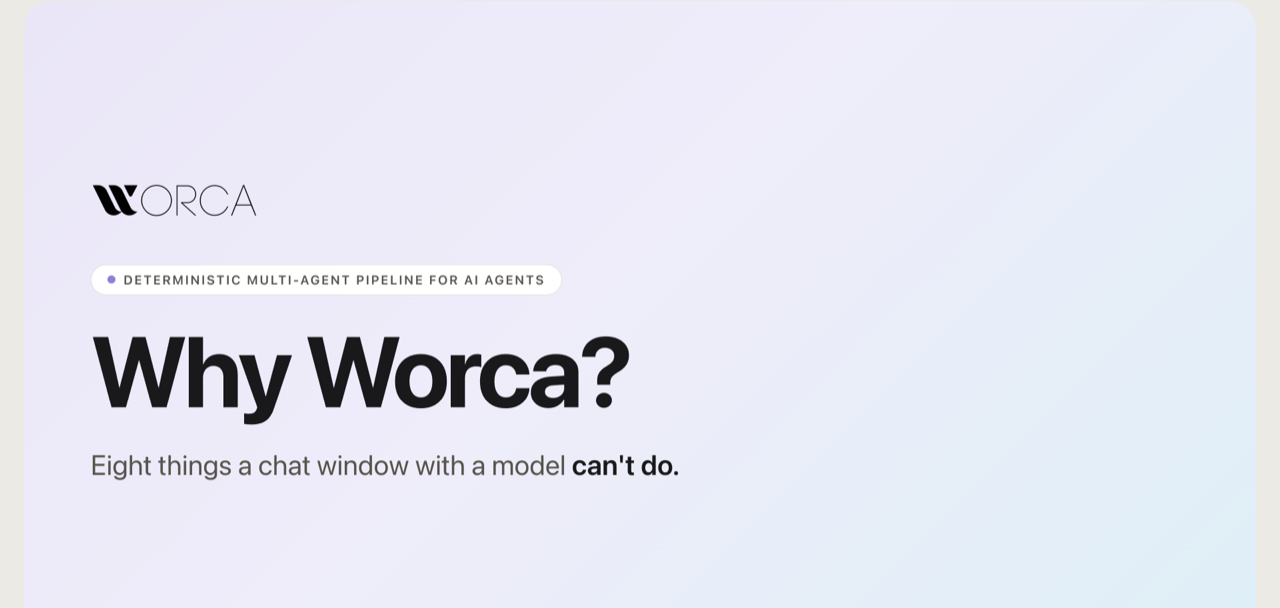
Describe the work.
Approve the result.
Agents do the creative work; the engine does the control flow. Pick a workflow, or let Auto build one for the task. Every step, verdict and file is recorded.
Hidden decisions become questions before any code is written.
The planner explores the codebase and writes a concrete plan.
The refiner rewrites the plan until no major issues remain.
The implementer follows the approved plan, test first.
The reviewer sends blocking findings back until the diff is clean.
A finished run ends on its own branch, one click from a pull request. See the whole pipeline →
Everything
a run needs.
Any model, schedules, a record of every run, limits you set outside the agent, and a whole team working in one place.
Auto picks the workflow, or build one in the Composer: agents, script cards and bounded loops. Every step files what it wrote.
The pipeline →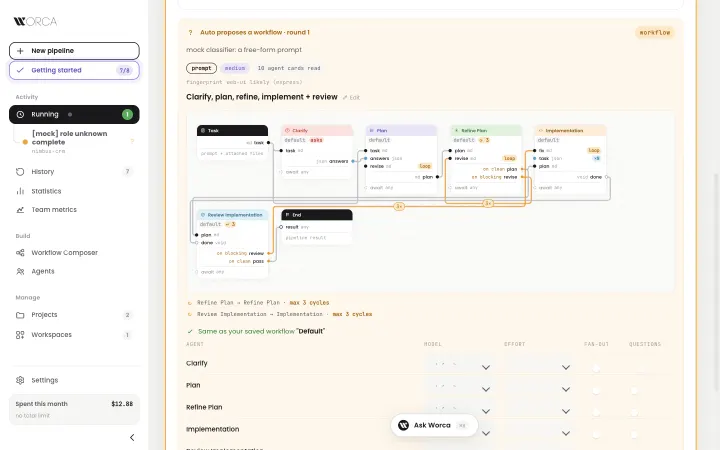
Claude, GitHub Copilot, Ollama or LM Studio on your desk, free OpenRouter models. Caps, budgets, and the hours each run saved.
Models & costs →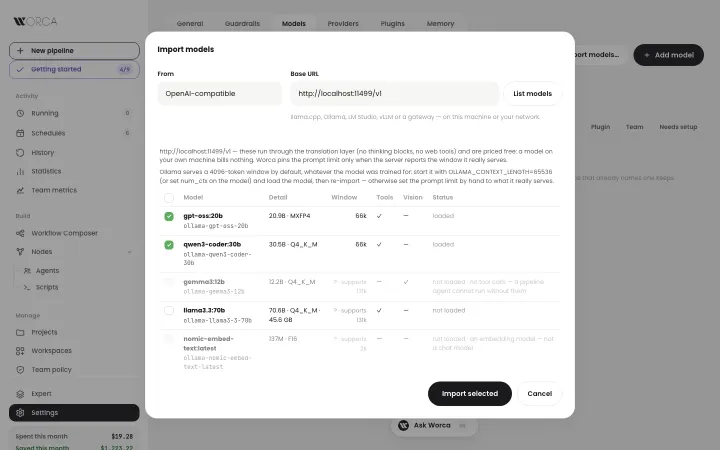
Schedule a run for tonight or every weekday, chain runs onto each other's branches, and answer from Slack or Telegram.
Automation →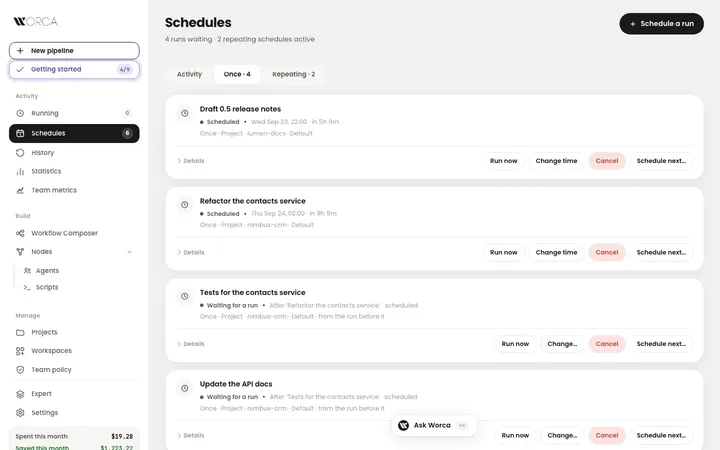
Ask what the reviewer flagged, attach a screenshot, let it read the docs page, or have it schedule the next run.
Ask Worca →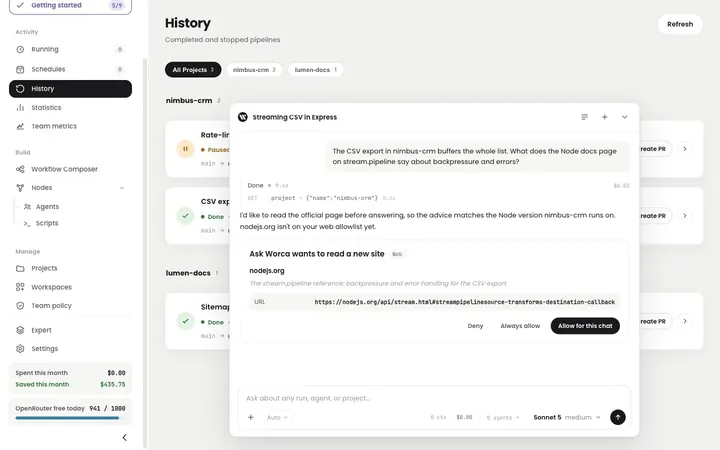
Metrics and a delivery timeline, a team policy kept in git, a shared server behind sign-in, and each person pays with their own key.
Teams →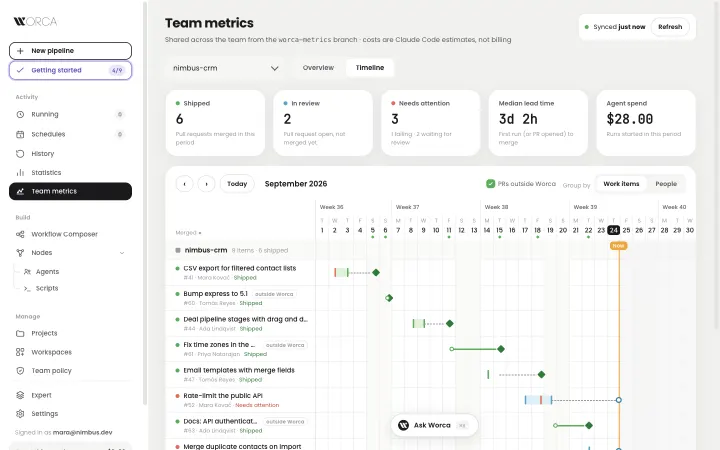
Guardrail policies that repo settings can't undo, a disposable container, and agents that never see a model key.
Security →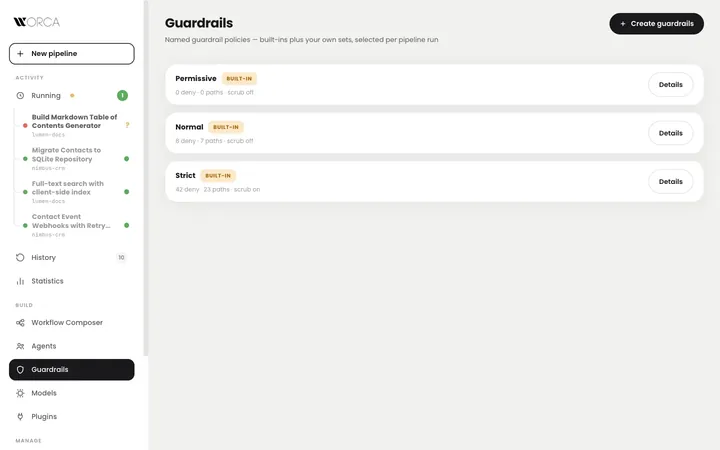
From your laptop
to your team's server.
The same Worca everywhere. Start on your own machine and move to a shared server when the team joins, keeping your workflows and history.
macOS, Linux or native Windows. npm i -g @worca/app
Agents run inside it, and your home folder isn't mounted. worca container up
Any container host, behind the sign-in you already use. Worca records who started, paused and approved each run.
Spend, a delivery timeline and team caps, stored on branches in your own repo. No extra server.
The rest of
the toolbox.
Ship work you
didn't babysit.
One npm install on macOS, Linux or Windows. Or a container, or a shared server for the team.